
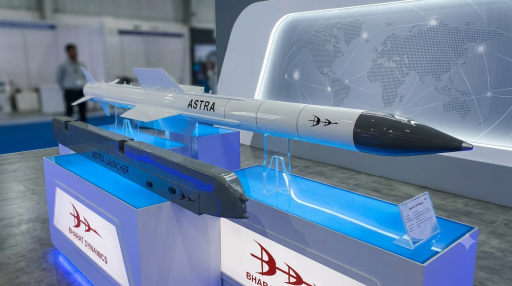
India’s Astra missile gains traction after combat success, Indonesia eyes Mk2 option


Combat success fuels Indonesia’s reported interest

Indonesia is studying the possibility of acquiring India’s Astra Mk2 beyond-visual-range air-to-air missile as part of broader defense cooperation with New Delhi, following the weapon’s reported combat success during India’s Operation Sindoor in May 2025.

The reported interest comes as Indonesia continues diversifying its defense procurement while seeking to reduce dependence on a single supplier.

According to Defence Security Asia, the Astra missile’s performance aboard Indian Air Force Su-30MKI fighter jets during the operation boosted confidence in India’s domestically developed defense technology, providing operational validation beyond laboratory testing and technical specifications.

Combat record strengthens appeal

Dr. Teuku Rezasyah, an international relations scholar at President University, said the Indonesian Air Force (TNI AU) has been evaluating the missile’s interoperability as part of its ongoing assessment of defense equipment from multiple countries.

“The advantage is that the system has been proven in actual operations while remaining relatively cost-competitive,” Teuku told Indonesia Business Post on Friday.

He said internal assessments indicate the missile is well suited to Indonesia’s operational requirements, particularly in close-combat scenarios where Indonesian fighter pilots already possess extensive training, including night operations.

“The missile is energy efficient and can reach speeds of up to Mach 3 after launch,” he said.

Integration challenges remain

Despite its reported advantages, Teuku said integrating the missile into Indonesia’s defense ecosystem would require further technical evaluation.

“The technology is still relatively new, and Indonesian Air Force technicians are continuing to study its integration and interoperability with existing platforms,” he said.

The Astra Mk2 is India’s latest beyond-visual-range air-to-air missile, jointly developed by the Defence Research and Development Organisation (DRDO) and Bharat Dynamics Ltd.

The missile has a reported engagement range of up to 160 kilometers (99 miles), compared with approximately 110 kilometers (68 miles) for the Astra Mk1. It uses active radar guidance, is designed to resist electronic countermeasures, and is capable of engaging highly maneuverable fighter aircraft.

Although India has not officially disclosed export pricing, defense industry estimates place the missile’s value at US$1 million-US$2 million (Rp16.3 billion-Rp32.6 billion) per unit.


Source link