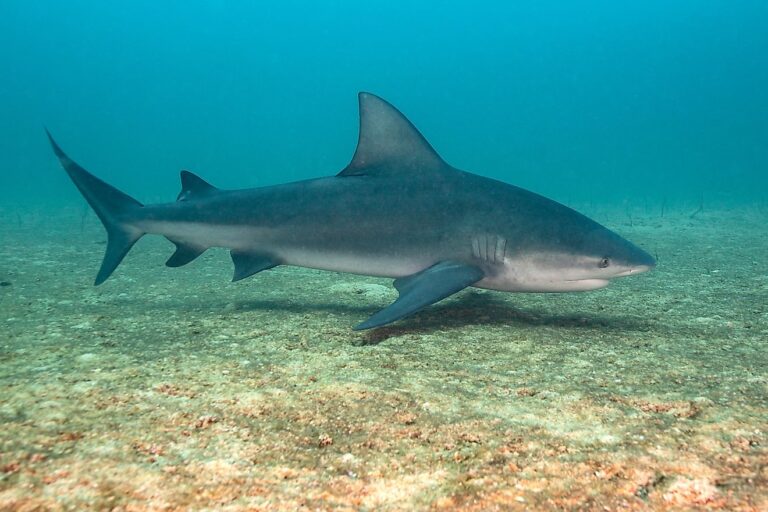
The bull shark is the one shark built to survive in fresh water. The planet holds roughly 117 million lakes. Barely a handful carry a reliable shark record. Most sharks stay bound to the ocean and perish within days of leaving it. That biology is why the Great Lakes shark stories stay myths. Real shark lakes all share a water route to the sea through a river or a canal or a flood. Each case below runs on that link and on the bull shark’s rare freshwater tolerance.
Lake Nicaragua, Nicaragua

For decades scientists thought Lake Nicaragua had its own endemic shark, the Lake Nicaragua shark. Specimen comparisons in 1961 settled the question. The animals were bull sharks, and they had reached the lake on their own. The route runs up the San Juan River, the lake’s only outlet, which flows east to the Caribbean Sea. The sharks even climb stretches of rapids that once seemed to rule out the trip.
This is the lake that made freshwater sharks famous, mostly because the animals turned up so far from the ocean. They were never trapped, though. Tagging has shown individuals moving between the lake and the sea in both directions. Young bull sharks use the low-salinity water as a nursery, then head back to the coast as they mature.
Lake Nicaragua also happens to be the largest freshwater lake in Central America, covering about 8,264 square kilometers, or roughly 3,190 square miles. Its shark population is a shadow of what it was. Fishing pressure, habitat loss, and a shark-fin operation that once worked the San Juan River have thinned the numbers, and sightings are now rare.
Lake Izabal, Guatemala

The path into Lake Izabal is gentler than the one into Lake Nicaragua, and that matters for sharks. Guatemala‘s largest freshwater lake drains toward Amatique Bay and the Caribbean through the Rio Dulce, a relatively shallow river with none of the San Juan’s dramatic rapids. Large animals move up it without much trouble.
Scientific records from the Izabal-Rio Dulce system confirm bull sharks in the lake, alongside sawfish, which are rays rather than sharks. How many sharks still use the system today is unclear. Older records and local accounts describe them as once familiar in the area, but recent sightings appear scarce.
Like Lake Nicaragua, Izabal works best as one link in a connected lake-river-sea chain rather than a sealed-off shark habitat. The sharks are visitors from the coast, not permanent residents cut off inland.
Lake Jamoer, Indonesia

Half a world away, a small lake in West Papua carries one of the oldest shark records on this list. Lake Jamoer, also written Yamur or Danau Jamur, drew the attention of 20th-century scientists who described a “freshwater shark of Jamoer Lake.” Later reviews reassigned those records to the bull shark.
The lake sits in a lowland tropical basin where old marine connections and river links may explain how sharks reached such an unlikely inland spot. That geological backstory is the reason the record survives at all.
No traveler should expect an easy sighting here. The scientific record matters, but current population data is thin, so Jamoer reads as a historical and poorly documented case rather than an active shark lake.
Lake Bayano, Panama

A dam built the shark trap at Lake Bayano. This reservoir in eastern Panama formed in the 1970s when engineers dammed the Bayano River. Bull sharks and largetooth sawfish had lived in that river system beforehand, and some sharks ended up stranded in the new lake once the dam closed off the water.
That makes Bayano one of the strangest man-made shark habitats anywhere. It was never a stable one, though. With the route to the sea blocked, the sharks lost access to the coastal areas where bull sharks normally breed.
The result is a historical, artificial case rather than a thriving modern population. Bayano shows what happens when a dam turns river sharks into accidental lake dwellers.
Lake Gatun, Panama

Lake Gatun is the freshwater heart of the Panama Canal, created during construction to carry ships between the Atlantic and Pacific sides of the isthmus. Marine fish have slipped into this engineered system for more than a century, yet credible bull shark records stayed absent for most of that time.
That changed with a single documented capture. Researchers confirmed a juvenile bull shark inside Lake Gatun, traced its origin to the Pacific through DNA and vertebral chemistry, and linked its arrival to the newer Cocolí locks. The finding shows how canals let ocean predators reach deep into freshwater.
One confirmed shark is not a resident population, so Gatun belongs here with a caveat. It has an ironclad record of a bull shark, but it is not yet a place where sharks reliably live.
Carbrook Golf Club Lake, Australia

The oddest entry sits on a golf course. During floods in the 1990s, several juvenile bull sharks washed out of the Logan and Albert rivers in Queensland, Australia, and into a lake beside the fairways at Carbrook Golf Club. The floodwater receded, and the sharks stayed.
They lasted far longer than anyone expected. Six bull sharks lived in that isolated lake from 1996 to 2013, the longest documented case of the species surviving in a landlocked, low-salinity body of water. The club leaned into it and named a tournament after them.
Then they were gone. A 2013 flood may have let some slip back to the river, while at least one died on site. Carbrook stands as a remarkable temporary chapter rather than an active shark lake.
Lake Pontchartrain, United States

Lake Pontchartrain lands on plenty of shark lists, but it fails the freshwater test. This Louisiana water body is a large brackish estuary, tied to the Gulf of Mexico through the surrounding passes and tidally influenced throughout.
Bull sharks do turn up here, especially juveniles. The warm, shallow, low-salinity water makes a useful nursery, offering young sharks food and cover from the bigger predators that patrol the open Gulf.
Because the salt and the tides run through it, Pontchartrain counts as an estuarine lake rather than a true freshwater one. Sharks belong to its ecology, but the label matters for this list.
Lake Maracaibo, Venezuela

Lake Maracaibo carries the same asterisk. People call it a lake, but this Venezuela basin opens to the Gulf of Venezuela and behaves more like a brackish tidal bay than a sealed freshwater lake.
That marine connection lets bull sharks and other coastal animals move into the wider system. Freshwater inflow, brackish stretches, mangroves, and coastal habitat mix here, which suits some sharks and rays.
Maracaibo earns a place on any list of low-salinity shark habitats. It does not earn one among landlocked freshwater shark lakes, because it never truly closes off from the sea.
Lake Sentani, Indonesia

Lake Sentani is the weakest case on the list. This West Papua lake shows up in shark roundups, but its evidence lags well behind Nicaragua, Izabal, or Jamoer. Its real claim to fame is unusual fish life and historical sawfish records, and sawfish are rays that people routinely mistake for sharks.
Stories and local reports mention sharks in or near Sentani, yet nothing clearly establishes a bull shark population. The record stays ambiguous.
For that reason Sentani reads as a possible or disputed case, not a confirmed freshwater shark lake. It rounds out the list as a reminder of how thin some of these claims can be.
Why Sharks Stick to Saltwater
Nearly every shark species is bound to the ocean and cannot rework its body chemistry to handle fresh water. The bull shark is the exception. It regulates salt and water internally well enough to pass between marine, brackish, and freshwater habitats, which is the single reason any of these lakes have a shark story at all.
Even so, bull sharks stay tethered to the sea. Every lake on this list connects to the ocean, carries brackish water, or filled with sharks through a flood or a dam. Scientists have never confirmed a shark population living permanently in a fully landlocked freshwater lake.
For swimmers, the odds of meeting a shark in a lake stay extremely low. Where bull sharks might occur, the sensible moves are to skip murky water, keep clear of active fishing and river mouths, and stay out at dawn and dusk. Anyone who spots a shark should leave the water calmly.
The takeaway holds across all nine cases: lakes are among the safest places to swim when it comes to sharks. The exceptions are rare and fascinating, and they nearly always come back to the bull shark’s remarkable tolerance for fresh water.