
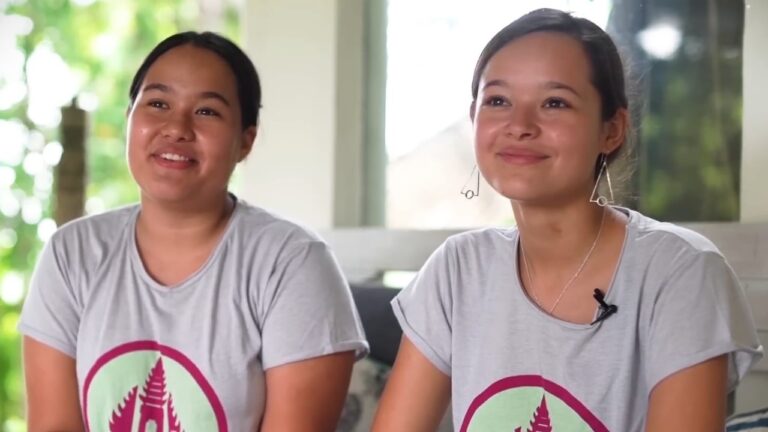
At just 12, Melati Wijsen began fighting Bali’s plastic bags: A hunger strike helped get her to the governor, and her youth movement later spread around the world


At just 12, Melati Wijsen began fighting Bali’s plastic bags: A hunger strike helped get her to the governor, and her youth movement later spread around the world
Melati and Isabel started Bye Bye Plastic Bags after studying figures such as Nelson Mandela and Mahatma Gandhi at school | Wikimedia Commons

Melati Wijsen was 12 and her younger sister Isabel was 10 when a classroom lesson at their school in Bali left them with a question that was far larger than an ordinary school assignment: what could children actually do to change the island where they lived? Their answer eventually became Bye Bye Plastic Bags, a youth-led campaign that spent years organising petitions, presentations and clean-ups before the sisters took a more dramatic step, staging a hunger strike as they tried to secure a meeting with Bali’s governor and push the problem of single-use plastic higher up the political agenda.According to the sisters’ exact TED talk, Our campaign to ban plastic bags in Bali, Melati and Isabel started Bye Bye Plastic Bags after studying figures such as Nelson Mandela and Mahatma Gandhi at school and asking themselves what they could do as children living in Bali. The sisters describe building a team of children, collecting signatures and repeatedly trying to meet the governor before deciding to stage a hunger strike from sunrise to sunset, under medical supervision. By the following day, they said, they were taken to meet him.

bali

Melati and Isabel started Bye Bye Plastic Bags after studying figures such as Nelson Mandela and Mahatma Gandhi at school | Wikimedia Commons

A hunger strike turned years of campaigning into a meetingThe hunger strike has become one of the most repeated parts of the sisters’ story, but it was not the beginning of their campaign and it did not instantly produce Bali’s eventual plastic restrictions. It came after petitions, educational work and repeated efforts to get officials’ attention, while the wider campaign continued for years alongside other environmental groups and communities on the island.According to UNESCO’s exact profile of Bye Bye Plastic Bags, Melati and Isabel were 12 and 10 when they launched the initiative, and after six years of campaigning, single-use plastic bags were banned in Bali. UNESCO says the organisation focused on education and awareness while also helping local women produce alternative bags, and its annual Bali’s Biggest Clean Up has mobilised tens of thousands of people across hundreds of sites.The sisters’ campaign also grew beyond collecting plastic bags from beaches. In 2018, TIME named Melati and Isabel among its 25 Most Influential Teens and reported that Bali’s Biggest Clean-up that year drew 20,000 people who collected 65 tons of waste. TIME also reported that the sisters had helped persuade 350 local businesses to commit to eliminating everyday plastic products including cups and straws.

bali (1)

Kuta Beach | Wikimedia Commons

Bali’s ban came after years of pressure from many groupsThe legal change itself needs to be described carefully. According to Bye Bye Plastic Bags’ own media page, the sisters’ advocacy and petitioning over six years “played a part” in the Bali government’s 2018 decision to introduce restrictions on single-use plastics, alongside the work of many communities and NGOs. The organisation does not claim that Melati or Isabel single-handedly created the ban.The resulting policy was Bali Governor Regulation No. 97 of 2018. According to the Regional Knowledge Centre for Marine Plastic Debris’ regulation summary, the Bali regulation targeted disposable plastic products including plastic bags, polystyrene and plastic straws. A later assessment of the regulation states that Bali’s restrictions on those products took effect in 2019. By then, the campaign that began with two schoolgirls had already moved well beyond Bali. Bye Bye Plastic Bags’ social profile identifies the organisation as a youth-driven NGO with 60 global teams, while UNESCO describes it as reaching an increasing number of countries and inspiring young people to organise around plastic pollution. The most striking part of Melati’s story is therefore not that one 12-year-old personally banned plastic bags across an island. It is that a campaign begun by two children survived years of petitions, clean-ups and political frustration, reached the governor after a hunger strike and became part of the wider pressure that preceded Bali’s restrictions on single-use plastics.


Source link