
Indonesia Palm oil association lobbies Russia for stronger market access


Partnership aims to expand Indonesian palm oil trade and investment across the Eurasian market

Indonesia’s palm oil industry is stepping up efforts to diversify its export markets by forging a strategic partnership with Russian and Eurasian industry associations, seeking broader market access and stronger long-term trade cooperation.

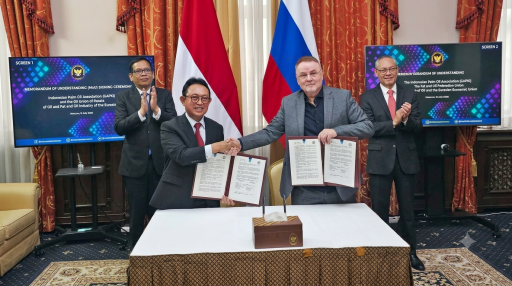
The Indonesian Palm Oil Association (GAPKI) signed a Memorandum of Understanding (MoU) with The Fat and Oil Union of Russia and the Association of Enterprises of the Fat and Oil Industry of the Eurasian Economic Union (EAEU) in Moscow on July 10, 2026. The agreement is expected to support greater trade, investment and industrial cooperation in vegetable oils between Indonesia and the Eurasian region.

GAPKI Chairman Eddy Martono said the agreement provides a strong foundation for long-term collaboration between the vegetable oil industries of Indonesia and Russia.

“This memorandum of understanding is a strategic step to strengthen the long-term partnership between the vegetable oil industries of Indonesia and Russia. We believe closer collaboration will create greater opportunities for trade, investment and innovation, while expanding market access and strengthening the competitiveness of the vegetable oil industries of both countries,” Eddy Martono said, as cited by InfoSAWIT on July 14, 2026.

The signing ceremony was witnessed by Indonesian Ambassador to Russia and Belarus Jose Tavares, officials from the Indonesian Embassy in Moscow, including the trade attaché, and representatives of the Indonesian Oil Palm Plantation Fund Management Agency (BPDP).

Expanding access to the Eurasian market

Under the MoU, both associations agreed to strengthen mutually beneficial trade through industry information exchanges, joint promotional activities, business networking, and expanded market access for palm oil and downstream products across Indonesia, Russia and member states of the Eurasian Economic Union.

The partnership also includes the establishment of joint working groups, policy advocacy, technology development, investment promotion, seminars and regular industry dialogue aimed at boosting bilateral trade in vegetable oils.

The agreement follows Indonesia’s broader economic engagement with the Eurasian region after the country signed a Free Trade Agreement with the five EAEU members: Russia, Kazakhstan, Belarus, Armenia and Kyrgyzstan in St. Petersburg on December 21, 2025.

Through the agreement, the FTA will eliminate or reduce import tariffs on more than 90% of Indonesian product categories entering the EAEU, creating wider export opportunities in a market of around 180 million people.

Russia emerges as a growing export destination

Russia has become an increasingly important destination for Indonesian palm oil exports, particularly as producers seek alternative markets amid rising trade barriers and sustainability regulations in the European Union, including the European Union Deforestation Regulation (EUDR).

According to GAPKI, Indonesia exported 792,000 tonnes of palm oil products to Russia in 2025, valued at US$919 million (approximately Rp14.89 trillion), up from 680,000 tonnes worth US$681 million (approximately Rp11.03 trillion) in 2024.

The largest export category was refined palm oil (RBD Palm Oil), totaling 689,000 tonnes valued at US$726 million (around Rp11.76 trillion). Exports also included 81,000 tonnes of refined palm kernel oil (RBD PKO) worth US$159 million (around Rp2.58 trillion) and 23,000 tonnes of oleochemical products valued at US$34 million (approximately Rp551 billion).


Source link