
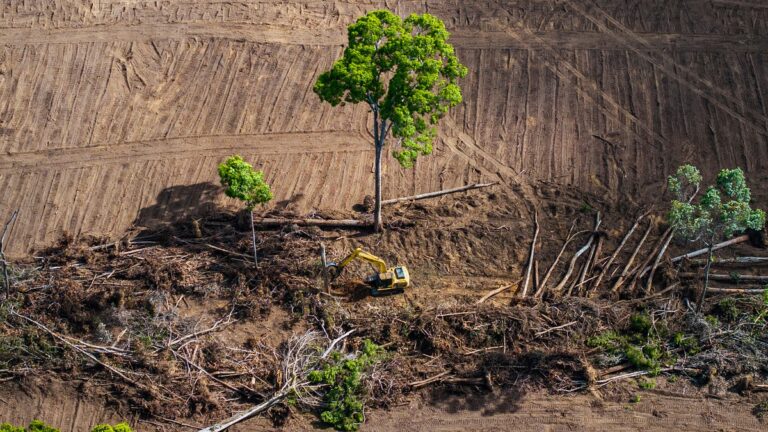
Taxpayer-funded Australian sugar institute linked to abuses in West Papua


Source: Ulet Ifansasti/Greenpeace – an aerial view of forest clearance and sugarcane plantation development by PT Global Papua Abadi (GPA) in Merauke, West Papua – September 18, 2025

A sugar research organisation funded by the Australian government is under scrutiny for its links to an Indonesian company allegedly involved in forcibly displacing Indigenous people and widespread deforestation in West Papua.

In July 2024, Sugar Research Australia (SRA) – which received $9.4m in taxpayer money that year – agreed to supply genetically modified sugarcane varietals to Indonesian company, PT Global Papua Abadi (GPA). The varietals were designed to be more pest and disease resistant in the tropical West Papuan climate, where sugarcane has historically been difficult to grow.

According to a December 2025 Greenpeace investigation, a consortium of ten Indonesian companies have so far been granted concessions for sugarcane cultivation covering 560,000 hectares in the Merauke region of West Papua, in what it described as “the world’s largest deforestation project”.

Indigenous peoples in West Papua made formal objections to the sugar plantation development as early as June 2024. Since then, nine UN Special Rapporteurs have co-signed two letters to the Indonesian government alleging companies in the area have been forcibly displacing Indigenous people, first in October 2024 and again in March 2025.

To produce 1.2m kilolitres of sugar, some additional 700,000 hectares will be carved out of the forest in Merauke – an area about three-fifths the size of Sydney and larger than the island of Bali.

In the most recent letter from the UN, PT Global Papua Abadi and Pt Murni Nusantara Mandiri, itself a member of the GPA group, were alleged to have been allowed “to clear land, covering vast areas that overlap with the customary territories of these Indigenous tribes” with the assistance of the Indonesian military.

This reportedly included the construction of a battalion headquarters on the traditional land of the Kwipalo clan and the current site of a plantation operated by GPA.

“We are deeply concerned about reports of intimidation, criminalisation and threats against community leaders and environmental defenders that voiced concerns about the … projects,” the letter said.

“These appear to be linked to the exercise of their right to freedom of expression and freedom of peaceful assembly and their calls for the protection of the communities’ rights to food, water, health and a healthy environment.”

The Indonesian government rejected these allegations, saying the development has been carried out in accordance with existing law and that “to date, no request has been submitted by any party for the area in question to be classified as customary land”.

A recent documentary-style film, Pesta Babi, sought to capture the devastation but has since been banned by Indonesian censors. The family of a prominent environmental campaigner and Marind tribeswoman, Yastina Moiwend, who appeared in the film, accused the Indonesian military of kidnapping her in May following its release.

Source: Jurnasyanto Sukarno/Greenpace – an aerial view shows the deforestation inside the PT Murni Musantara Mandiri (MNM) sugarcane concession in Merauke, West Papua – December 11, 2025

Source: Ulet Ifansasti/Greenpeace – campaigner stands in a forest cleared for sugarcane plantations by GPA in Merauke – September 18, 2025

Source: Ulet Ifansasti/Greenpeace – Vincent Kwipalo, leader of the Kwipalo Clan, stands in his native forest, cleared for sugarcane plantations by MNM in Merauke, West Papua – September 17, 2025

SRA’s transfer of the genetically modified plant material appears to have enabled the aggressive development of sugarcane plantations across West Papua and in the district of Merauke since.

An SRA spokesperson said that the contract was “terminated in November 2024” with “no current or future intention of having any further involvement with the company in any capacity, commercially or otherwise”. But they did not clarify the circumstance under which the contract was ended, or whether the company retains rights to cultivate the crop.

“SRA takes human rights and environmental issues seriously. SRA was not aware at the time of the engagement with PT GPA of the actions by both the Indonesian military and PT GPA in Merauke,” they told Deepcut.

Get 25% off for 1 year

SRA’s involvement was raised by Greens Senator David Shoebridge and Coalition Senator Paul Scarr during a Senate committee hearing in late May.

Scarr questioned why an Australian research institution had assisted Indonesian companies that were in direct competition with local producers but were not subject to similar environmental or human rights standards.

Victoria Anderson, Secretary of the Department of Agriculture, Fisheries, and Forestry (DAFF), stressed in the hearing that SRA was an independent organisation that “makes their own decisions” and has “their own accountable authority” separate to her department.

Over the course of the hearing, Anderson was also asked to clarify her department’s understanding of the concurrent roles of Mark Day as non-executive director at SRA and the head of mills at GPA in 2024. Day later took up a full-time position with the Indonesian company.

Day, a long-time figure in the Queensland and Indonesian sugar industry, previously served as CEO of Mackay Sugar, the head of Indonesian Sugar Estates and a former General Manager with CSR.

Anderson said she was similarly unaware of the circumstances surrounding Day’s role, but said DAFF would investigate the matter further.

Deepcut sought comment from Day via his employer. A GPA spokesperson responded saying it “will not be providing comments on the matters raised”.

An SRA spokesperson said “Mr Day himself had flagged early in the engagement that he would have a potential conflict of interest.”

“To manage this, he was excluded from all board decisions and board papers regarding the engagement with PT GPA,” they said.

“Mr Day was subsequently put on a leave of absence from the Board. He resigned from the Board in February 2024 as his ongoing dealings with the Indonesian sugar industry made it untenable for him to continue to serve as a director of SRA. Mr Day has not been involved with SRA since his resignation.”

Deepcut does not suggest that Day committed any wrongdoing.

Speaking after the hearing, David Shoebridge said Indonesia’s activity in West Papua may be a difficult issue for Australia but there were “potentially very serious ramifications from this” and that “there needs to be political accountability”.

“Australia can’t, on the one hand, openly cause further dispossession, further violence against West Papuans and on the other hand step away from the issue.”

Got a tip? Send an email to tips@deepcutnews.com or send an anonymous Signal to @deepcut.25.


Source link