
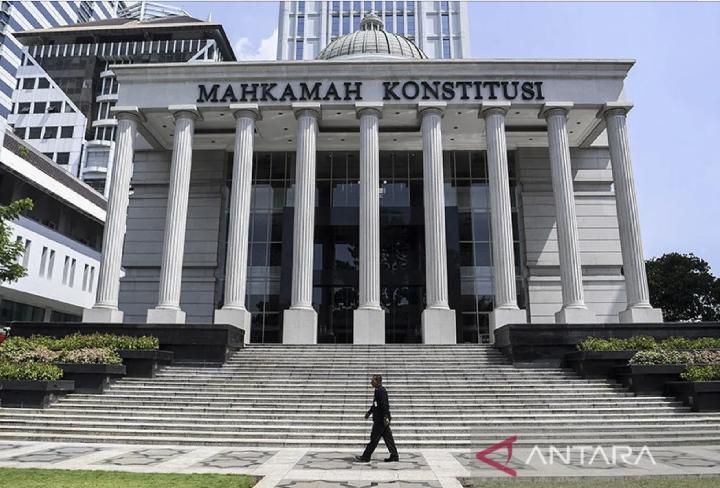
TEMPO.CO, Jakarta – An advocate, Muhammad Hafidz, has filed a lawsuit against legal protection for the buyers of special debt instruments such as Patriot Bonds and Merah Putih Bonds under the Law on Developing and Strengthening of The Financial Sector (PS2K Law).
The lawsuit, registered under Case Number 253/PUU-XXIV/2026 challenges the phrase in Article 50A paragraph (5) of the PS2K Law. It stipulated that the state guarantees and protects the purchase of special debt instruments from general criminal prosecution, special criminal prosecution including tax offenses, and civil lawsuits.
According to Hafidz, these protection measures could eliminate culpability while creating legal immunity despite the transactions being sourced from unlawful funds.
“Article 1, number 72 of the PS2K Law, which guarantees and protects the purchase of special debt instruments from legal entanglement, will create muddled legal accountability,” Hafidz told the panel of judges in the preliminary hearing on Wednesday, July 8, 2026.
The applicant also believes that the regulation is contrary to Article 28D paragraph (1) of the 1945 Constitution because it shuts out legal mechanisms that have been instrumental for advocates in fighting for their clients’ rights.
He argued that when the law closes all avenues of legal enforcement against certain legal subjects, advocates lose the space to provide legal aid, file legal remedies, and ensure fair legal enforcement processes.
“As a result of the application of this norm, the Applicant loses the opportunity to carry out their profession optimally when providing legal assistance to the public who have legal interests in Patriot Bond or Merah Putih Bond transactions,” Hafidz said.
Limited application of Article 50A of P2SK Law
With this argument, the applicant asks the Constitutional Court to declare the phrase “from general criminal prosecution, special criminal prosecution, including tax offenses, and civil lawsuits” contrary to the 1945 Constitution and not legally binding under certain conditions.
The applicant proposes that legal protection should only apply as long as the purchase of Patriot Bonds or Merah Putih Bonds is made in good faith in accordance with statutory regulations, and the source of funds does not stem from criminal acts, unlawful conduct, or harmful acts that causes state losses.
With this change, Hafidz said, legal protection would still be provided to well-intentioned investors, but would not shield purchases made using proceeds of crime.
In the preliminary hearing, Constitutional Justice Arsul Sani asked the applicant to strengthen his argument by including evidence that the disputed provision has the potential to foster money laundering offenses.
“Article 50A paragraph (5), quote unquote, can potentially foster or promote money laundering offenses, whereas this is something the country aims to eradicate; that’s why we have the Anti-Money Laundering Law,” Arsul said.
“This could potentially create a conflict of rules with the Anti-Money Laundering Law,” he added.
Meanwhile, earlier, Finance Minister Purbaya stated that the protection provided to buyers of Patriot Bonds and Merah Putih Bonds should not be interpreted as granting legal immunity to investors. He said that protection in special debt instruments only applies to funds placed in bonds, not to the entire business activities or legal obligations of investors as a whole.
However, he did not deny the money laundering risk that emerged from this policy. Nevertheless, he stated that the revenue from this could be used for development purposes.
Read: Are Patriot Bond Buyers Legally Immune? Here’s What Purbaya Says
Click here to get the latest news updates from Tempo on Google News
