
Behind all of these figures lies a fundamental and equally crucial question: who actually benefits from this development?
This issue gains even more traction when it comes to Papua, a region known for its abundant natural resources.
Its vast landscapes, rich biodiversity, and unique local commodities serve as major assets to support economic development and food security.
However, experience in many regions shows that an abundance of resources does not always translate into greater prosperity for local communities.
While development progresses, investment flows in, and production rises, the benefits are not necessarily distributed evenly among those who live and work in the area.
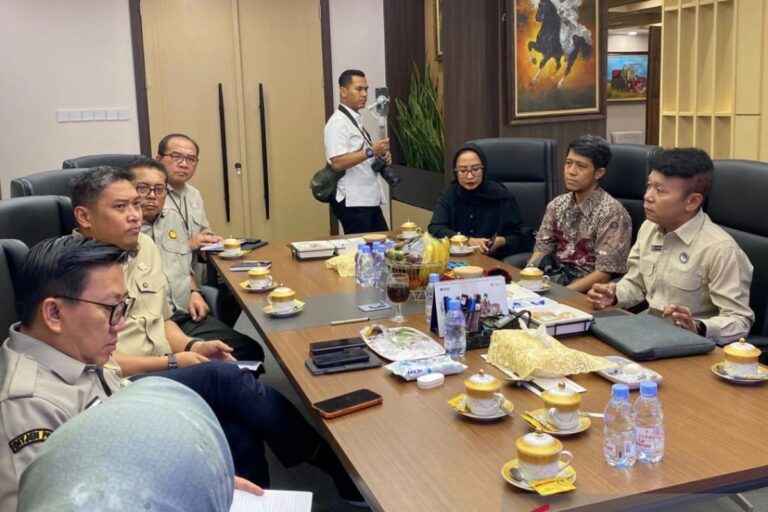
This prompted Billy Mambrasar, a member of the Presidential Executive Committee for the Acceleration of Papua’s Special Autonomy Development, to meet with Deputy Minister of Agriculture Sudaryono and ministry officials. He advocated for young Indigenous Papuan farmers, urging that they be given greater opportunities in national agricultural programs.
The aspiration championed was beyond agricultural matters; it contained a bigger question on how development should be designed to involve local communities as the main players.
Many residents across various villages in Papua have a strong passion for farming and have long depended on the land they have managed for generations. They know their soil, understand the seasons, and possess local wisdom passed down through the lineage.
However, this potential is often hindered by significant limitations, including uneven access to training, technical assistance not yet reaching all areas, limited adoption of modern agricultural technology, and difficulty in securing financing.
Meanwhile, marketing channels pose the greatest obstacle to farmers securing optimal economic value.
From the perspective of development economics, this situation is known as a market failure. It arises not because the community lacks ability, but because the existing barriers make it difficult for them to access the resources needed to thrive.
Access to resources
In such a situation, the state plays a strategic role, not only as an assistance provider but also as a facilitator that opens up access, bolsters capacity, and creates an ecosystem that allows communities to grow independently.
Deputy Minister of Agriculture Sudaryono assessed that Papua possesses immense capital, such as massive land potential, a productive younger generation, and rich local commodities.
Therefore, empowering young Papuan farmers must extend beyond short-term programs. What is truly needed is capacity building, access to technology, continuous mentorship, and strong market connectivity.
This approach is vital as modern agriculture has undergone massive shifts. Farming is no longer just about planting and harvesting.
Today’s agriculture demands business management skills, digital literacy, technology adoption, and the ability to read market demands.
Head of the Agricultural Counseling and Human Resources Development Agency, Idha Widi Arsanti, emphasized that human resources development is the key to successful agricultural development in Papua.
Young farmers must be equipped with skills that align with actual needs to be able to compete and develop within a modern agricultural ecosystem.
At the same time, infrastructure support is also vital and cannot be overlooked.
The Director General of Agricultural Land and Irrigation at the Ministry of Agriculture, Hermanto, pointed out that Papua’s regional characteristics are highly diverse. Consequently, land and irrigation development in the region must be tailored to local conditions to ensure sustainable growth in agricultural productivity.
The smallholder livestock sector also plays a vital role in strengthening food security. Developing livestock farming not only helps meet animal protein needs but also opens up new sources of income for residents.
With the right support in animal health, breeding, feed management, and institutional strengthening for livestock farmers, this sector has the potential to become one of the drivers of Papua’s local economy.
Economic impact
The involvement of Indigenous Papuan farmers is expected to have a more extensive economic impact beyond increasing food production.
When local communities are involved in the production chain, economic benefits circulate within the region. Farmers’ incomes rise, purchasing power increases, small businesses grow, and new jobs emerge.
This condition is known as a multiplier effect. Every increase in community income generates further economic activity, ultimately elevating the well-being of the community collectively.
Therefore, the success of agricultural development in Papua should not be measured solely by the number of hectares planted or the tonnage of crops harvested.
A far more critical metric is the extent to which Indigenous Papuans are involved in the process and derive tangible benefits from the ongoing development.
Experience in many countries shows that the most sustainable development is one that grows from the community itself. When people become the primary drivers, they develop a strong sense of ownership over the programs. They will not only ensure their continuity but also constantly evolve and adapt them to meet local needs.
Papua has the potential needed to emerge as a new center of growth in Indonesia. What it genuinely requires is policy advocacy, consistent mentorship, and a commitment to placing Indigenous Papuans at the center of development.
Food security is not merely about guaranteeing food availability, but also about efforts to build dignity, create opportunities, and expand room for the community to determine its own future.
When Indigenous Papuan farmers are given access, trust, and the opportunity to thrive, what grows is not just food production, but also economic independence, optimism among the youth, and the hope that development truly benefits those who have long been an essential part of the Land of Papua.
Related news: Papua focuses on rice sufficiency to lift farmers’ welfare
Related news: Women in Papua village grow taro to support food security
Editor: Primayanti
Copyright © ANTARA 2026
