
Highlights
- Researchers from Universitas Bangka Belitung found cerium concentrations up to 6,079 ppm and yttrium up to 3,846 ppm in former tin mining pits.
- Younger, more acidic pits consistently showed higher rare earth concentrations than older, weathered sites, suggesting weathering history is a key targeting factor.
- The study used portable XRF and water chemistry across 12 sites but did not include mineralogy, metallurgical testing, or economic analysis.
- Findings represent geochemical exploration indicators, not commercial discoveries, and require significant additional work before any resource estimate can be made.
- Indonesia’s extensive legacy tin tailings and abandoned pits could become lower-impact feedstock sources if economically recoverable mineralization is confirmed.
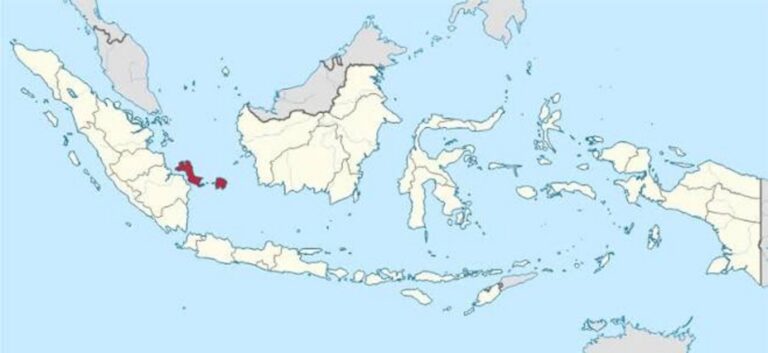
A new Indonesian study (opens in a new tab) led by Mardiah (opens in a new tab) and colleagues Irvani, Franto, M. Eriska, and F. Elrica from the Department of Mining Engineering, Faculty of Science and Engineering, Universitas Bangka Belitung (opens in a new tab) suggests that abandoned and recently active tin mines on Indonesia’s Bangka Belitung Islands may host meaningful concentrations of rare earth elements (REEs), including cerium, lanthanum, yttrium, and neodymium. Using geological field mapping, portable X-ray fluorescence (XRF), and water chemistry measurements, the researchers found that younger, more acidic former tin pits consistently contained higher REE concentrations than older, weathered sites, indicating that geology, mine age, and weathering history may help identify promising secondary sources of critical minerals in one of the world’s most important historic tin belts.


How the Study Worked
Rather than drilling new deposits, the researchers investigated 12 former tin mining pits across the Muntok and Jebus districts of West Bangka Regency. Samples were analyzed using portable XRF to identify elemental composition, while pit water pH and surrounding geology were mapped to determine how weathering, lithology, and environmental conditions influence rare earth enrichment. Young pits (1–5 years old) were compared with older pits (21–35 years old).
What the Researchers Found
The highest rare earth concentrations occurred in the younger Muntok pits. Maximum reported values reached 6,079 ppm cerium, 3,232 ppm lanthanum, 3,846 ppm yttrium, and 1,454 ppm neodymium. According to the authors, active weathering of granite-derived sediments under acidic conditions appears to promote the release and concentration of REEs, while older pits have likely lost much of their rare earth content through decades of natural leaching.
Mardiah, Masters of Engineering, First Author


Source: UBB
Why This Matters
For Rare Earth Exchanges® readers, the study reinforces an increasingly important investment theme: historic mine waste and legacy tin operations may become valuable secondary sources of critical minerals. Indonesia’s long history of tin mining has created extensive tailings and abandoned pits that could potentially provide lower-impact sources of rare earth feedstock if economically recoverable mineralization can be demonstrated.
Study Limitations
Investors should interpret the findings cautiously. This is an exploration-targeting study, not a resource estimate. Portable XRF identifies elemental concentrations but does not determine whether the rare earths occur in commercially recoverable minerals such as monazite or xenotime, nor does it establish metallurgical recovery, processing economics, or mine viability. The study examined only 12 sites and did not include mineralogical characterization, beneficiation testing, or economic analysis. As a result, the reported anomalies represent promising geochemical indicators—not commercial discoveries.


Source: MDPI
Who Conducted and Funded the Research?
All five authors are affiliated with the Department of Mining Engineering, Faculty of Science and Engineering, Universitas Bangka Belitung, a public Indonesian university located in one of Southeast Asia’s premier tin-producing regions. The institution has increasingly focused on mining engineering, mine rehabilitation, and critical mineral research associated with Indonesia’s legacy tin industry.
The study was funded internally by Universitas Bangka Belitung through its 2025 Faculty of Science and Engineering research program (RKAKL 2025), with no disclosed mining company sponsorship.
REEx Evidence Strength: 5.5/10 (Moderate-Low). The study provides useful field-based geological evidence supporting further exploration of Indonesia’s former tin districts for rare earth elements. However, considerably more work—including mineralogy, metallurgical testing, resource estimation, and economic evaluation—is required before these findings can be translated into commercially viable rare earth projects.
Citation: Mardiah, Irvani, Franto, M. Eriska, & F. Elrica. (2026). Rare earth element content based on geology in Muntok and Jebus Subdistricts, Bangka Belitung Islands Province. IOP Conference Series: Earth and Environmental Science, 1580, 012062. DOI: 10.1088/1755-1315/1580/1/012062. Publication type: Peer-reviewed conference proceedings (IOP Conference Series), rather than a high-impact primary research journal.
Register today: REEx Marketplace™ (opens in a new tab)
