
Actual, real-world use cases is the test of digital public infrastructure (DPI) and the community is keeping a close eye on Indonesia.
The largest country in Southeast Asia, in both population and geography, Indonesia is running a real DPI test, which will be followed keenly as it prepares to host the Global DPI Summit in Bali in March 2027.
The Indonesian government is rolling out a digital social protection program. Known as Perlinsos, the program was piloted in the town of Banyuwangi, in the far eastern end of Java. It’s being expanded to more than 40 districts and cities, aiming for a national rollout for October.
Perlinsos is significant for a real-world use of DPI as it combines digital identity, cross-agency data exchange and beneficiary verification mechanisms. The digitized public service is designed to make the programme more efficient for its end users and generate major cost savings for the government. These benefits are the broad goals of DPI, making Indonesia’s “dress rehearsal” a useful test.
Whereas bureaucratic silos mean citizens must repeatedly prove their identity, Indonesia is trying to streamline. By compelling government agencies to cooperate and exchange data, verification times can be reduced to hours. Integrated data systems and digital identity means the government verifies information electronically.
GovInsider reports that the Banyuwangi pilot demonstrated beneficiary verification times fell from several months to just hours and even to minutes in some cases. Costs also reduced to nearly zero.
Citizens’ trust will be a critical test for Perlinsos as it becomes one of Indonesia’s largest government data‑exchange systems under the Personal Data Protection Law (UU PDP).
Success will hinge on accurate assistance delivery and also on whether the government can apply data protection principles in practice.
The public will expect clarity on data use, oversight and responses to security incidents, along with meaningful control over consent. Trust will depend on governance.
Digital inclusion is another major challenge. A system meant to support people in poverty risks excluding those with the weakest digital access. Connectivity gaps remain stark, with internet access in rural and underdeveloped regions (3T areas) is just 9.3 percent.
Perlinsos will need hybrid verification methods, community facilitators and proactive outreach to ensure equitable access. For national rollout, success will depend on continuous learning, GovInsider argues.
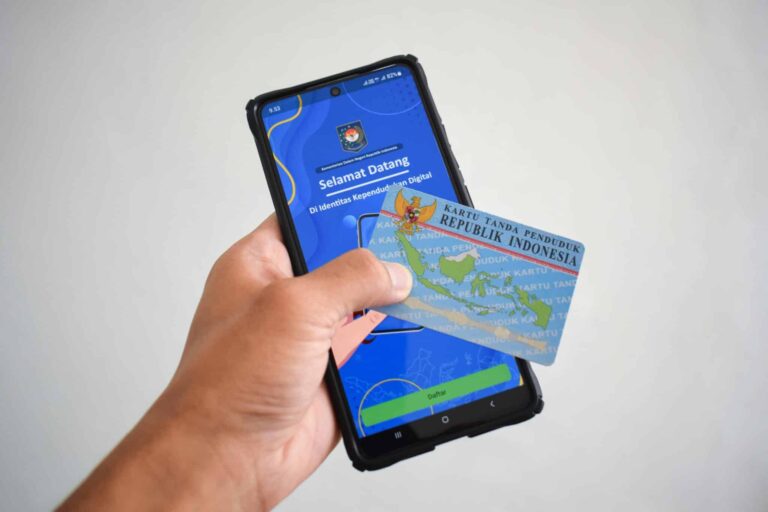
Indonesia’s DPI journey is set to hit a big milestone as the national digital identity app, the IKD, approaches 20 million users. Indonesia brought its IKD digital identity platform, digital payment and data exchange platforms when it joined the 50-in-5 campaign.
“While IKD today still has relatively limited functionality, reaching this scale is an important achievement and places it among Indonesia’s most widely used government apps and one of the world’s largest digital identity applications,” commented the World Bank’s Jonathan Marskell.
In addition, Indonesia has issued its first birth certificate generated directly through integrated health–civil registry data. It marks a significant step toward faster, more seamless digital public services.
The milestone was achieved through collaboration between RSAB Harapan Kita, the Health Ministry’s digital transformation team, and Dukcapil. It demonstrates how automated data exchange can reduce manual processes and enable timely birth reporting, making essential services quicker, simpler and more accessible for citizens.
Article Topics
data exchange platform | digital ID | government services | Identitas Kependudukan Digital (IKD) | Indonesia | social protection
