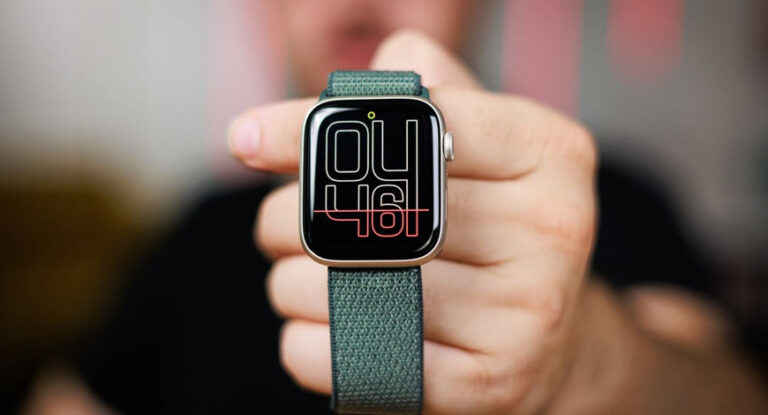
Edge AI hits 25% of smartwatch shipments in Q1 2026


Global Edge AI-capable smartwatch shipments grew by 70% YoY in Q1 2026, reaching a market penetration of 25%, according to the Counterpoint Global Smartwatch Shipments Tracker. This rapid growth is driven by consumers’ growing demand for more useful health and fitness insights, which are beyond basic metrics such as step count, heart rate monitoring and sleep duration. Additionally, low-power neural accelerators have made on-device processing feasible without compromising the device’s battery life, allowing AI features to run directly on the watch. This lets the device deliver instant health alerts like fall and arrhythmia detection, and personalized recommendations with a more private user experience, without relying heavily on a smartphone or cloud-based service.

Commenting on the AI rise in smartwatches, Principal Analyst Anshika Jain said, “Brands have been continuously upgrading their smartwatch hardware to make devices more AI-capable. Edge AI integration enables real-time health insights and faster responses while helping ensure data privacy. Currently, Edge AI penetration remains limited to leading brands, with Apple solely accounting for ~90% of Edge AI smartwatch shipments in Q1 2026.”

Edge AI penetration in global smartwatch, Q1 2026 vs Q1 2025

Counterpoint Research Edge AI Penetration in Global Smartwatch, Q1 2026 vs Q1 2025

Health and fitness monitoring is the primary driver of Edge AI integration in smartwatches. Rather than streaming bio signals to the cloud, watches now run inference locally to analyze heart rate, sleep patterns and temperature, in real time, and detect conditions such as atrial fibrillation, sleep apnea, and elevated blood pressure on device. This has pushed health-feature integration up sharply across the smartwatch industry. In Q1 2026, shipments of smartwatches with blood pressure monitoring doubled and those with sleep apnea detection tripled. Brands are now targeting harder problems such as diabetes.

On the supply side, chipset makers are constantly upgrading their silicon to turn smartwatches into intelligent health companions rather than passive trackers. Apple introduced its S9 chip, back in 2023, featuring a 4-core Neural Engine to handle machine learning tasks. Huawei introduced its in-house Kirin W80 chip in 2025, paired with its ‘Celia’ assistant, to stay competitive in the smartwatch AI race. For 2026, Qualcomm has announced the Snapdragon Wear Elite with a dedicated NPU, while Google’s upcoming Tensor-based wearable silicon is expected to deepen AI integration. Beyond the NPU-equipped devices we count today, a second layer of on-device AI is emerging on vector-core silicon without a dedicated NPU, as seen in Ambiq’s Apollo platform running neural inference through Arm Helium vector extensions and its new heliaCORE software kernel. This software-accelerated approach is worth watching as it could expand on-device AI to devices that fall outside the current hardware definition.

Emphasizing the smartwatch Edge AI outlook, Research Director Mohit Agrawal said, “Edge AI in smartwatches is shifting from primarily a hardware integration to one that also includes software optimization. The real unlock is smaller, more efficient models and OS-level access that lets any app run inference locally. AI needs to turn from a single application into a personal layer that works on personal data. This enables instant health alerts, gesture control, and richer personalized experiences, and that is why Edge AI penetration is set to approach 32% in 2026.” Counterpoint Research


Source link