
ASEAN Turns to Russia for Energy as Indonesian Nuclear Deal Approaches


Jakarta. Indonesia sees Russia as ASEAN’s key partner for stronger energy resilience, as Jakarta eyes Moscow’s expertise in developing nuclear power by possibly constructing a floating plant.

Leaders and senior politicians from the Southeast Asian bloc have gathered in Kazan for a meeting aimed at expanding ASEAN’s ties with Moscow. Energy security has transformed into a more pressing matter following skyrocketing crude prices amid the US-Iran war. 

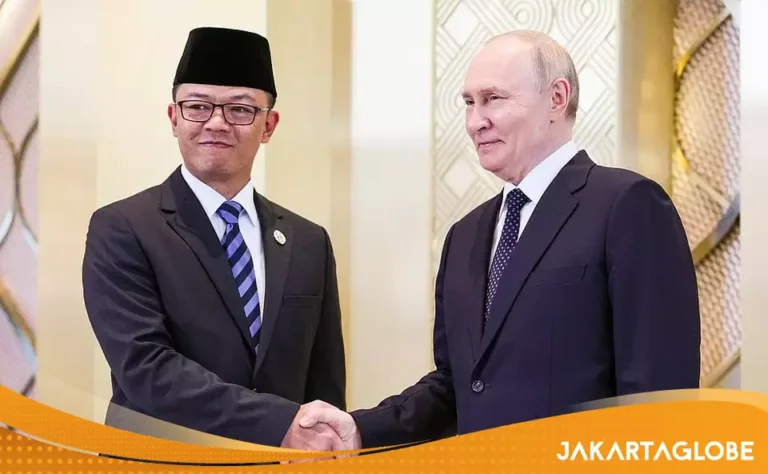
President Prabowo Subianto is skipping the Kazan trip over domestic matters, despite previously defending his heavy overseas travel schedule as a crucial maneuver to secure energy supplies. He has sent his foreign minister Sugiono to the talks co-chaired by Russian President Vladimir Putin.

At the meeting, Sugiono proposed that Russia be ASEAN’s “important partner” for energy resilience, given the country’s production size.

ADVERTISEMENT

“We seek cooperation that diversifies our sources, strengthens our supply chains, and shields our region from external shocks,” Sugiono told the forum on Thursday, as seen in a transcript provided by the Foreign Ministry. 

He went on to talk of Indonesia’s ambitions to be self-sufficient in energy within the next three years. To this end, Indonesia is embracing renewables and exploring “all available options, including the safe and peaceful use of civil nuclear technology”.

“Russia’s extensive experience in this field provides a strong foundation for cooperation. We seek a partnership built on technology transfer, human resource development, and the highest international safety standards,” Sugiono said.

ASEAN Turns to Russia for Energy as Indonesian Nuclear Deal Approaches
Foreign Minister Sugiono, Southeast Asian leaders and Russian President Vladimir Putin take a group photo at ASEAN-Russia Summit in Kazan on June 18, 2026. (Photo Courtesy of Foreign Ministry/Adit)

In Kazan, Russia’s state nuclear firm Rosatom boasted to the press of the deals and possible pacts made with ASEAN nations. Rosatom director-general Alexey Likhachev said the agency had already noticed Indonesia’s “tremendous interest” in nuclear technologies. Lickachev’s recent meeting with Prabowo in Jakarta also gave an impetus for this  partnership.

“We are moving towards agreements on the construction of a fleet of floating nuclear power plants in cooperation with local businesses interested in technology localization,” Likhachev said.

He did not say in which part of the Indonesia—the world’s largest archipelago—this upcoming floating unit would be primarily stationed. Russia is home to the world’s only floating nuclear plant, the Akademik Lomonosov. 

In Jakarta’s ASEAN neighbors, Rosatom has shaken hands on an agreement with Laos for a “peaceful” use of nuclear energy. Rosatom not long ago agreed to revive Vietnam’s nuclear ambitions by signing a deal that foresees the construction of two Russian-designed power units with a combined capacity of 2,400 megawatts.

The coal-reliant Indonesia aims to bring its first nuclear plant to commercial operation by 2032. Despite offers from several partners, its US-backed project involving the Oregon-based nuclear firm NuScale Power is seeing the biggest progress.  The project is centered in West Kalimantan.

Tags:

Keywords:


Source link