
Indonesia’s Rare Earth Mirage: A Critical Minerals Giant Still Waiting for Its REE Moment


Highlights

  • Indonesia identified eight prospective rare earth blocks in Kalimantan, Sulawesi, and Bangka Belitung, with state miner Perminas set to oversee development.
  • No commercial rare earth mining, separation plants, or verified export statistics have emerged from Indonesia in 2026—activity remains at exploration and research stages.
  • Indonesia’s most viable rare earth path is recovering monazite as a by-product from existing tin mining operations in Bangka-Belitung.
  • Illegal tin mining may account for up to 80% of local production in Bangka-Belitung, with raw ore smuggled toward Malaysia and China by small boats.
  • Indonesia’s critical minerals power rests on nickel ($16.4B in 2025 exports), cobalt, copper, tin, and gold—not yet on rare earths.

Indonesia has become one of the world’s most powerful critical mineral nations, transforming global nickel markets and emerging as an increasingly important producer of cobalt, tin, copper, gold, and bauxite. This cannot be underestimated in the emerging Great Powers Era 2.0 period. Yet despite years of speculation, one thing remains conspicuously absent: a commercial rare earth industry. A broad review of Indonesian government announcements, local media, and industry reporting through June 2026 found no verified evidence that Indonesia has entered commercial rare earth mining, large-scale separation, or meaningful rare earth exports.

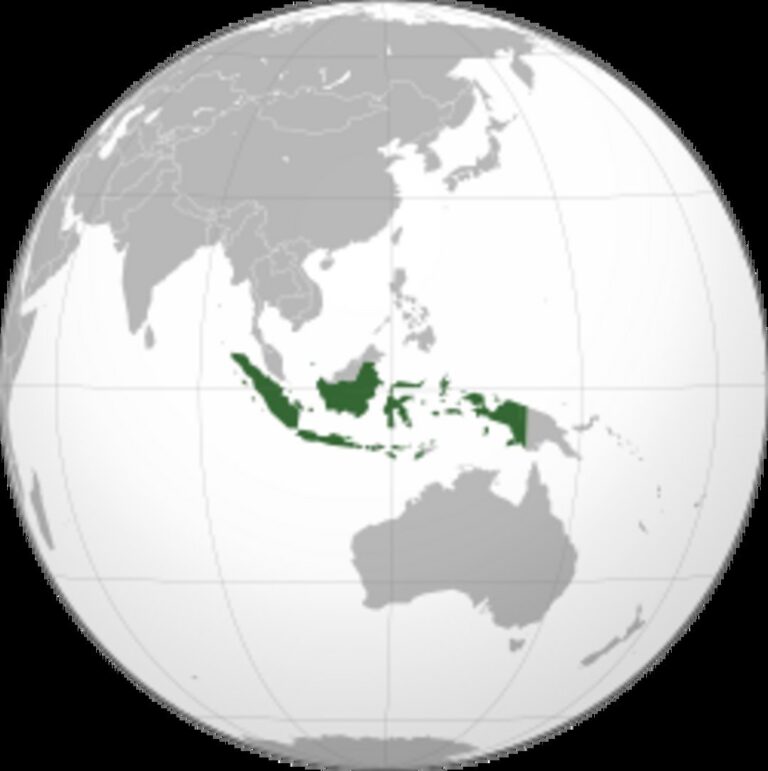
Indonesia archipelago marked in dark green on orthographic globe with Australia, Southeast Asia, and East Asia visible in graIndonesia archipelago marked in dark green on orthographic globe with Australia, Southeast Asia, and East Asia visible in gra

The country’s most significant rare earth development this year came not from a mine, but from Parliament. In February, Mineral Industry Agency Chairman Brian Yuliarto (opens in a new tab) announced that Indonesia had identified eight prospective rare earth blocks across Kalimantan, Sulawesi, and Bangka Belitung (opens in a new tab) as cited via Reuters. The newly created state-owned miner PT Perusahaan Mineral Nusantara (Perminas) is expected to oversee future development, while two research projects in Mamuju, West Sulawesi, will focus on rare earth processing technology. It is an important strategic signal—but it remains exactly that: exploration and research, not commercial production.

Indonesia’s long-term rare earth strategy appears to hinge on recovering rare earths as by-products, particularly monazite from tin mining and potentially certain nickel processing streams. The concept is technically sound and has been discussed publicly by government officials for more than a year. However, no commercial rare earth production figures, operating separation plants, or verified export statistics have emerged in 2026.

One persistent claim also fails to withstand scrutiny. Reports have circulated that authorities seized a ship smuggling rare earth materials out of Indonesia. Extensive searches of accessible government records and regional reporting could not obtain more details on the incident. The closest documented case involved the Malaysian Maritime Enforcement Agency, which intercepted a small vessel carrying 530 sacks (26.5 tonnes) of Indonesian tin ore being smuggled from the Bangka-Belitung region toward Malaysia.

While tin sands can contain monazite, the official reporting identified the cargo as tin ore, not rare earth concentrate, and no vessel name, cargo owner, or court disposition linked the shipment to rare earths. Likewise, no official Indonesian investigation identified any trader in connection with rare earth trafficking.

At present, these claims remain unverified. If rare earths remain largely aspirational, Indonesia’s broader critical minerals story is anything but.

Nickel remains the country’s economic powerhouse, generating approximately $16.4 billion in exports during 2025 as Jakarta tightened production quotas to support pricing and encourage downstream investment. Indonesia continues expanding its role in cobalt production, while copper exports remain strategically important during Freeport Indonesia’s smelter reconstruction. Tin exports remain a cornerstone of the country’s mining sector, and gold exports reached approximately $1.64 billion during the first nine months of 2025.

The government’s enforcement priorities reflect those realities. Rather than targeting rare earth smuggling specifically, Jakarta has intensified a sweeping campaign against illegal mining across roughly 190,000 hectares of forest land. Authorities have focused on unauthorized production of nickel, coal, quartz sand, limestone, and particularly tin. In Bangka-Belitung, illegal tin mining has become so pervasive that industry estimates suggest the shadow economy may account for as much as 80% of local production, with raw ore continuing to move clandestinely by small boats toward Malaysia and China.

For investors, the conclusion seems increasingly clear. Indonesia is already one of the world’s indispensable critical mineral powers—but it is not yet a meaningful rare earth producer. Its greatest opportunity lies in leveraging existing tin and nickel industries to recover rare earths as valuable by-products rather than developing standalone rare earth mines. If Jakarta can successfully commercialize monazite recovery in Bangka-Belitung and translate research in Mamuju into bankable processing projects, Indonesia could eventually become an important new node in Asia’s rare earth supply chain.

For now, however, the evidence supports a more measured conclusion: Indonesia’s influence is built on nickel, cobalt, tin, copper, and gold—not yet on rare earths.

Register today: REEx Marketplace™ (opens in a new tab)


Source link