
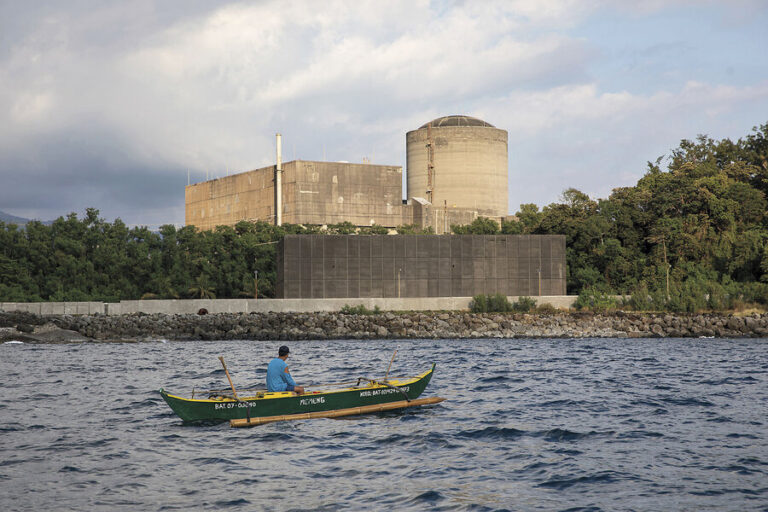
Why the Philippines is reconsidering its long-shuttered nuclear power plant


Together with their two children, Ruel Concepcion and his wife, Emily Fajardo, live a technologically modest life, owning a few electric fans, a rice cooker, and other basics. Yet their monthly electricity bill can consume up to 58% of the money Mr. Concepcion makes driving people around Mariveles, a tourist town at the tip of the Philippines’ mountainous Bataan Peninsula.

Filipino families face some of the highest electricity rates in Asia, and like many breadwinners, Mr. Concepcion is struggling to make ends meet, especially as the Iran war drives up costs of food, fuel, and other essentials. 

One potential solution to the country’s energy woes sits a short drive north of here: the long-shuttered Bataan Nuclear Power Plant (BNPP). 

Why We Wrote This

Earlier this week, we covered Uruguay’s renewable energy transition. As the Iran war raises energy prices, the Philippines weighs the costs of nuclear against the costs of staying its current course. What does a “peaceful, safe, and secure” approach to nuclear power look like?

Built in response to the 1973 oil crisis, the plant was beset by corruption and safety issues from the start. The government officially closed BNPP’s doors shortly after the 1986 Chernobyl disaster, and has never commissioned another plant since. 

But in recent decades, Manila has sought to reincorporate nuclear power into its energy portfolio to lower electricity prices, reduce the country’s reliance on imported coal and oil, and meet clean energy goals. It’s even in talks with a Korean company about the feasibility of reopening the BNPP. The public is warming up to nuclear, too – after decades of staunch opposition, a 2024 survey commissioned by the Energy Department found that more than 70% of Filipinos trust nuclear power as a reliable source of electricity, and many support rehabilitating the BNPP. 

Given their monthly expenses, one might expect the Concepcion family to be among that majority. Instead, they join environmental activists and church leaders pressing the country to reconsider its return to nuclear power, especially if it means sidelining other forms of renewable energy or jeopardizing public safety in an archipelago vulnerable to earthquakes and typhoons. 


Source link