
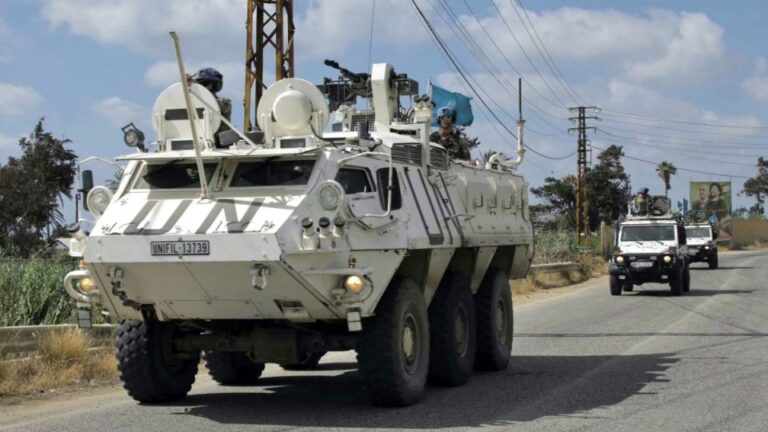
Malaysia has confirmed that it will keep its peacekeeping troops in Lebanon until the United Nations mandate expires in November this year.
Foreign Minister Datuk Seri Mohammad Hasan announced on Monday, saying troop-contributing countries had agreed at the UN to maintain their contingents until the mandate ends.
The Foreign Minister confirmed that the Malaysian Battalion, known as Malbatt, will remain stationed in southern Lebanon for the remaining months of the mandate.
He said: “At the moment, our Malbatt personnel are stationed behind the frontline, not on the border; they have been instructed to remain in their bunkers and camps because their safety is our main priority.”
He added that any decision beyond November would be brought to Malaysia’s Cabinet for approval, with the Defense Ministry playing a central role in the decision.
Southeast Asia is one of the most important regions contributing to the UN Interim Force in Lebanon (UNIFIL). As of July,2026, UNIFIL consists of 7,448 peacekeepers from 47 countries, and ASEAN nations make up a significant portion of that force.
Read More: UN Chief Outlines New Framework as Lebanon Peacekeeping Mission Nears End
Indonesia contributes 757 peacekeepers, Malaysia 516, Cambodia 181, and Brunei 21, making Southeast Asia one of the largest regional contributors to the mission.
Indonesia is UNIFIL’s single largest troop contributor. It contributes to the fifth-largest peacekeeping force in the world and the largest contingent in UNIFIL.
Malaysia has been part of UNIFIL since 2006. Malaysian peacekeepers have built a strong reputation for providing humanitarian assistance, rebuilding infrastructure, and maintaining relationships with local communities in southern Lebanon.
Additionally, Cambodia joined UNIFIL more recently and now contributes 181 peacekeepers, a significant commitment for a smaller nation still building its international standing.
However, for Indonesia, the Lebanon mission has come at a devastating human cost in 2026. On March 29, indirect artillery fire struck a UNIFIL position near Adshit Al Qusayr, killing Private First Class Farizul Romadhan and wounding three others.
Read More: Indonesia Urges UN Action After Peacekeepers Killed in Lebanon
The following day, two more Indonesian peacekeepers, Captain Zulmi Aditya Iskandar and First Sergeant Ikhwan, died when an explosion destroyed their vehicle near Bani Hayyan.
A preliminary investigation by the UN found that the soldier killed on March 29 died from an Israeli tank shell. The following day, two more Indonesian peacekeepers were killed by an improvised explosive device, with Hezbollah likely responsible.
The deaths sparked enormous anger in the Indonesian public, Islamic organizations, and opposition figures. An emotional logic dominated Indonesian social media: “Our soldiers are dying, and the government is doing nothing.”
Indonesia’s foreign ministry called the attacks unacceptable and urged the UN Security Council to immediately convene a meeting of troop-contributing countries to review the situation and take stronger measures to protect the personnel.
Despite the public pressure, Indonesia decided to stay, as a premature withdrawal would hand a strategic advantage to the US and Israel, remove a recognized peacekeeping presence that had supported civilian protection in Southeastern Lebanon, and erode the peacekeeping credibility Jakarta has spent seven decades building.
Read More: Israel Deepens Invasion of Lebanon, Seizing Historic Castle
UNIFIL has found itself caught in the crosshairs of both Israel and Hezbollah. Israel has repeatedly been accused of firing on UN positions, while Hezbollah has also been held responsible for attacks on peacekeepers.
The mission force has already shrunk from over 10,500 to approximately 8,200 as the drawdown accelerates. Croatia has withdrawn.
Argentina pulled out in November 2024. South Korea has announced its departure by the end of 2027. Poland plans to leave by August 2026.
Malaysia’s Foreign Minister was blunt about the situation; he said: “Malbatt is a peacekeeping force, but there is a war taking place now.”
UNIFIL is expected to leave Lebanon at the end of 2026, generating new uncertainties and ongoing tensions over Hezbollah’s disarmament.
For Malaysia, Indonesia, Cambodia, and Brunei, the question of what comes after November is one that will require careful and difficult decisions. For now, they stay, but the cost of staying has never been higher.

