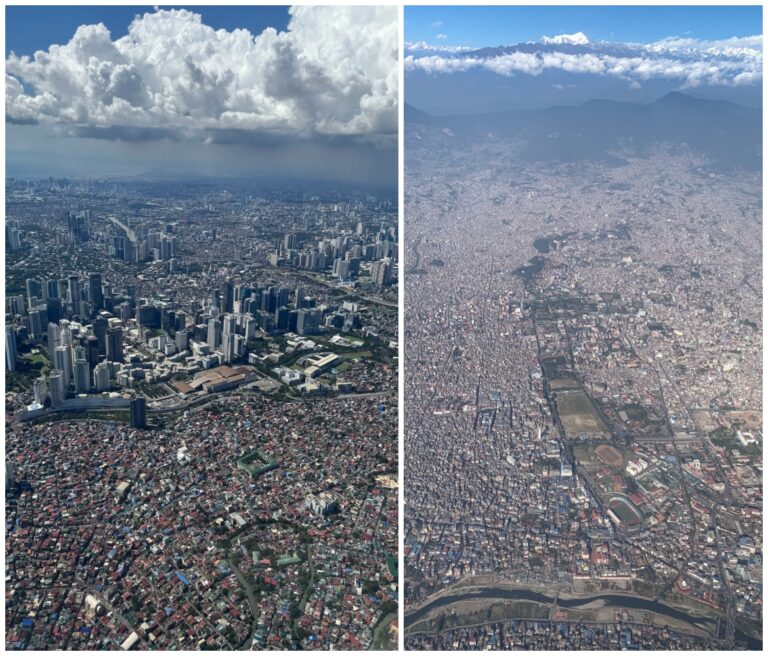
Comparing economic models of Nepal and the Philippines


A Nepali travelling through Metro Manila or Cebu City in the Philippines will notice a strong cultural similarity to Kathmandu.

Filipinos are famously laid back, just as Nepalis are. The pace of life can be slow, and daily operations run in a form of ‘managed chaos’ that feels very familiar for someone from Kathmandu.

Like Nepal, the Philippines also relies on exporting migrant workers. In 2024, personal remittances from Overseas Filipino Workers (OFWs) reached $38.34 billion, about 8.3% of their total GDP. Nepal is much more dependent on remittances which account for nearly 25% of its GDP.

However, the Philippines has an economy multiple times larger than Nepal’s, yet the level of visible inequality and intense consumerism is striking. This presents a clear case study for Nepal as the new government charts a national development strategy.

On paper, the gross economic output and individual income averages in the Philippines are much higher. The archipelago’s GDP per capita is about three times more than that of landlocked Nepal, so one might expect better urban living conditions. Instead, the inequality is inescapable and highly visible.

Directly adjacent to high-rise corporate offices of Bonifacio Global City (BGC) in Manila or the Cebu Business Park, the urban poverty is glaring. Slums, dilapidated streets, and families living in shacks exist right next to modern financial centres. 

This observation is backed by data. The Philippines has a high Gini coefficient (a metric used to measure income inequality) of around 39.3. A higher number means greater inequality. Nepal’s Gini index stands at around 30.

UNIFORMLY POOR

Nepal may be statistically poorer, but its income distribution is more balanced. The average Nepali often enjoys a better economic baseline. Yes, poverty is widespread in Nepal, but it is more evenly distributed. 

In the Philippine model, hyper-wealthy pockets exist side-by-side with  severe urban deprivation. The level of retail capitalism in the Philippines is higher than in other Southeast Asian countries like Thailand, Vietnam, or Indonesia.

In Manila and Cebu, mega-malls, cafes, and restaurants are constantly packed. The urban population is visibly much more influenced by Western-style consumerism, where life revolves around purchasing goods and services. There is a strong sense that people are earning primarily to spend on immediate consumption rather than building long-term assets.

This behaviour is a major driver of the Philippine economy. Household consumption accounts for over 70% of the country’s GDP. This is heavily funded by external income from overseas Filipinos sending money home. 

In Nepal, remittance cash is used differently: it generally goes toward buying rural land, paying off family debt, education, health, and basic household survival. In the Philippines, it is injected directly into the urban retail sector, fueling a fast-moving consumption cycle that keeps dependency on imported consumer items high.

The Philippines is noticeably more expensive for tourists and residents alike compared to other Southeast Asian nations, and there are three  three structural reasons for this inflation:

  • Low Agricultural Productivity: Unlike Vietnam or Thailand, which export food, the Philippines runs a food trade deficit. The agricultural sector has faced low domestic investment, making the country reliant on food imports.

  • Import Reliance: Because the country imports basic food items like rice, it is vulnerable to global supply chain disruptions. When prices rise internationally, domestic food inflation spikes, sometimes quickly peaking above 8%. This directly impacts poorer families who spend more than half their income on food.

  • Service Sector Expansion: The rapid growth of the service sector specifically the Business Process Outsourcing (BPO) industry, has brought significant cash into urban areas. This increases the demand for services and housing in cities, driving up prices while actual local production of physical goods remains low.

The result is an expensive economy where the cost of living outpaces the earning capacity of lower- and middle-class individuals.

Nepal is far behind the Philippines in infrastructure development and overall GDP. However, its lower starting point gives  Nepal a policy advantage. We can choose to avoid the pitfalls of unequal, consumption-driven growth.

If Nepal allows its future growth to be driven entirely by the consumption of imported goods, high inflation, and neglected agriculture, we will replicate the extreme inequality seen in the Philippines.

Learning from the Philippine case study, therefore, Nepal’s national strategy needs to focus on three specific areas:

i. Decentralise Urban Development

Nepal must avoid concentrating all modern infrastructure inside Kathmandu Valley. Government investment should focus on secondary cities such as Butwal, Pokhara, Biratnagar, and Itahari to create self-sustaining economic hubs. This will distribute jobs evenly and prevent the formation of massive urban slums.

ii. Prioritise Domestic Agriculture

Nepal cannot afford to abandon its agricultural base in favour of a pure service economy. It must modernise local supply chains, protect agricultural land, and improve domestic yields. Maintaining food self-sufficiency is the best way to cushion the population from global inflation shocks.

iii. Channel Remittances into Capital Investment

Instead of allowing remittance inflows to fund the consumption of imported luxury goods, the government must create financial instruments that direct this money into productive assets. This could includes hydropower projects, infrastructure bonds, and localised manufacturing sectors.

Economic growth is necessary for Nepal, but the type of growth matters. The Philippines shows that a high GDP and modern city centres do not automatically solve the poverty problem if the underlying economic structure rewards consumption over production and concentrates wealth in too few hands.

As Nepal works toward LDC graduation, its focus should not just be on increasing output, but on ensuring that growth is decentralised, productive, and equitable.

Suugam Nanda Bajracharya specialises in economic policy, private sector development, and sustainable growth, focused on market systems and inclusive economic development.


Source link

Tinggalkan Balasan

Alamat email Anda tidak akan dipublikasikan. Ruas yang wajib ditandai *